In plain words
Think of a restaurant brand that cooks in someone else’s licensed kitchen. The menu, the name on the door and the service are yours. The kitchen, its hygiene certificate and the inspector’s visits belong to the kitchen owner, who can tell you what you may and may not cook.
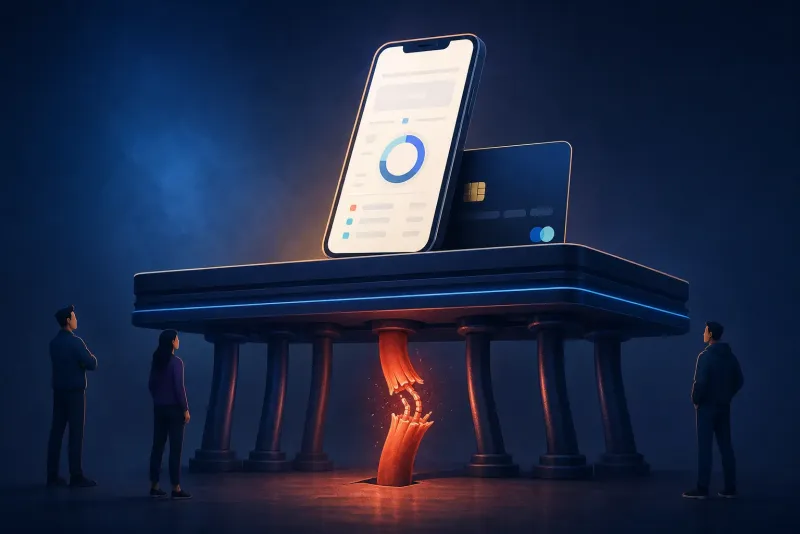
Banking-as-a-Service (BaaS) works the same way. A licensed bank or EMI already has the licence, the safeguarding or deposit accounts, the connections to payment systems and the card scheme membership. It opens these up through APIs, so another company can build its own app on top. Customers see your brand. Their money, their accounts and the regulated activity sit with the licence holder.
This is how many neobanks, wallets and embedded finance products launch: they borrow a licence instead of waiting months or years for their own.
How it works
How BaaS works
Your brand on top. The partner’s licence and rails underneath.
-
1
The customer signs up in your app
Your app collects their details and runs identity checks, to the standard the partner has agreed with you.
-
2
Your system calls the partner’s APIs
The partner opens an account, issues an account number or virtual IBAN, and can issue a card.
-
3
The partner holds the money
Customer funds sit with the licensed partner, safeguarded or held as deposits. It stays accountable to its regulator for them.
-
4
Payments run on the partner’s rails
Transfers and card payments go through the partner’s scheme memberships. Your app shows the result and your back office handles support.
Who does what in a BaaS set-up
The split is never just “they do banking, we do the app”. It is set out in the contract, and getting it wrong is the most common source of delays.
| Area | BaaS partner (licence holder) | Your company (the brand) |
|---|---|---|
| Licence and regulator relationship | Holds it and answers to the regulator | Operates under it, often as an agent or distributor |
| Customer money | Holds and safeguards it, or holds it as deposits | Never holds it |
| Payment rails and cards | Scheme memberships, or a BIN sponsor arrangement | Integrates through APIs |
| KYC and AML | Sets the policy and stays accountable | Often runs the checks and the first-line reviews |
| Product and customer experience | Approves features and marketing | Designs, builds and runs them |
| Customer support and complaints | Oversees and may handle escalations | Usually the first point of contact |
Under UK rules, a payment or e-money firm that uses agents or distributors stays responsible for what they do on its behalf. That is why partners run due diligence on you and keep the right to stop your programme. 1
What BaaS gives you and what it costs you
Gives you
- A launch without your own licence or capital
- Accounts, cards and transfers from one contract
- Payment scheme access you could not get alone
- A compliance framework to work within
- Time to prove demand before a licence decision
Costs you
- Control over which customers and countries you serve
- Margin, through per-account and per-transaction fees
- Speed, when every new feature needs partner approval
- Independence, if the partner exits or is restricted
- Easy migration, if your data lives only in their system
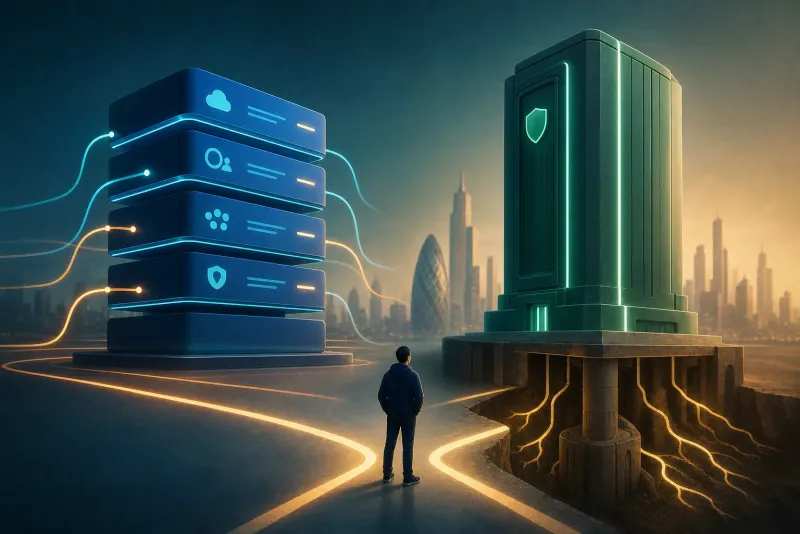
The risks on the right are not reasons to avoid BaaS. They are reasons to design for them from the start. We go deeper in BaaS is your biggest hidden risk.
BaaS in the UK, EU and Gulf
BaaS is a business model, not a licence type. What changes from market to market is which licence sits underneath and how the regulator treats the brand on top.
| Market | Typical licence underneath | How the brand usually operates |
|---|---|---|
| United Kingdom | EMI, payment institution or bank, authorised by the FCA (and the PRA for banks) | As an agent or distributor registered by the licence holder, under the Payment Services Regulations 2017 and Electronic Money Regulations 2011 2 3 |
| European Union | EMI, payment institution or bank licensed in one member state | Under the partner’s licence, which can be passported to other EEA countries |
| UAE and Saudi Arabia | Banks and licensed payment or stored value firms, supervised by the central bank | Usually through a partnership with a local licence holder. The models are less standardised than in the UK and EU, so each set-up needs its own legal check |
A model that works in London does not automatically work in Dubai or Riyadh. Read why sponsor dependency looks different in the UK and UAE before you plan a second market.
Example: a freelancer wallet on BaaS
Omar is building a wallet for freelancers in the UK. He has no licence and wants to be live in a few months.
- Partner choice. He signs with a UK EMI that offers accounts, cards and Faster Payments through APIs. The EMI registers his company as its distributor.
- Due diligence. The EMI reviews his business plan, his team, his target customers and his KYC flow before it lets him onboard anyone.
- Build. Omar’s team builds the app, a back office and a ledger that mirrors every balance and transaction held at the EMI.
- Live. A customer signs up, passes KYC and gets account details and a card in the app. Their money sits at the EMI, safeguarded.
- Daily routine. Omar’s back office reconciles his own records with the EMI’s reports every day, so any mismatch is caught before customers notice it.
Common misconceptions
“With BaaS, compliance is the partner’s problem.”
The partner is accountable to the regulator, but it will push much of the daily work to you and audit how you do it. Weak controls get programmes paused.
“BaaS gives me a full banking product out of the box.”
It gives you regulated building blocks. The app, the back office, support tools, limits, fees and reporting are still yours to build or buy.
“Switching BaaS providers is just a new API.”
Customers may need new account numbers and cards, and their data and history must move too. Migration is a project, and much easier if your own ledger holds the truth. See BaaS vs EMI for neobanks.
FAQ
What is Banking-as-a-Service in simple terms?
A licensed bank or EMI lets another company use its accounts, cards and payment connections through APIs. The other company builds the app and the brand, and the licence holder provides the regulated parts underneath.
What is the difference between BaaS and embedded finance?
Embedded finance is what the customer sees: a wallet, card or loan inside a non-financial product. BaaS is one of the ways to supply it: the licensed partner behind the scenes that actually holds the money and runs the regulated services.
Do I need a licence to use BaaS?
Usually not on day one, because you operate under the partner's licence, often as its agent or distributor. You still have legal and contractual duties, and some activities, such as lending or crypto, may need permissions of your own.
Is BaaS safe for customers?
Customer money is held by the licensed partner, which must safeguard it if it is an EMI or protect it as deposits if it is a bank. The main risk is operational: if the partner fails, pauses your programme or its records do not match yours, customers can lose access for a while.
How long does it take to launch with a BaaS provider?
Technical integration can take weeks, but due diligence, contracts and compliance onboarding by the partner often take longer. Plan for a few months from first call to live customers.
What are the risks of BaaS?
Dependency on one partner, limits on which countries, customers and features you can offer, pricing you do not control, and the cost of migrating if the partner changes direction. A plan for a second partner or your own licence reduces that risk.
Related terms
Sources
-
1
FC
Financial Conduct Authority Payment Services and Electronic Money: Our Approach PDF
https://www.fca.org.uk/publication/finalised-guidance/fca-approach-payment-services-electronic-money-2017.pdf -
2
LG
legislation.gov.uk The Payment Services Regulations 2017
https://www.legislation.gov.uk/uksi/2017/752/contents -
3
LG
legislation.gov.uk The Electronic Money Regulations 2011
https://www.legislation.gov.uk/uksi/2011/99/contents