In plain words
Think of an online-only shop. It has no high-street store, but you can buy almost everything a department store sells, often faster and with better service. Behind the website, though, the goods may come from its own warehouse or from a partner’s.
A neobank is the same idea for money. It gives you an account, a card, transfers and often extras such as spending insights, savings pots or multi-currency balances, all inside a mobile app. There are no branches. What varies is what sits behind the app: a full banking licence, an EMI licence, or another company’s licence through BaaS.
That difference is invisible on the phone screen, but it decides what the neobank can offer, how customer money is protected and how quickly the business can launch.
How it works
How a neobank works
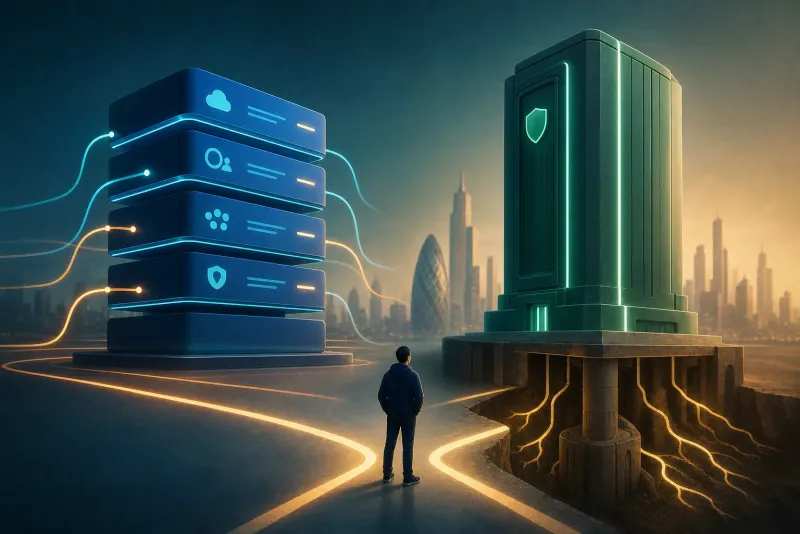
The app on top. Several systems and partners underneath.
-
1
The customer signs up in the app
They take a photo of an ID document and a selfie. KYC checks confirm who they are, usually within minutes.
-
2
An account is opened
The core banking system creates the account and gives it an account number or IBAN, its own or a partner’s.
-
3
The money is protected
If the licence is a bank’s, deposits are insured up to a limit. If it is an EMI’s, the money is safeguarded, kept separate from the firm’s own.
-
4
Cards and payments run through partners
Cards are issued through a card scheme member or a BIN sponsor. Transfers use national payment systems, directly or through a partner.
Neobank vs traditional bank
The differences are less about technology than about the licence and the business model.
| Neobank | Traditional bank | |
|---|---|---|
| Branches | None, app only | Usually, plus online banking |
| Licence | Banking licence, EMI licence or a partner’s licence | Always a banking licence |
| Lending | Only if it holds a banking or lending licence, or through a partner | Core of the business |
| Customer money protection | Deposit insurance, or safeguarding if on an EMI licence | Deposit insurance up to a limit |
| Technology | Usually modern, cloud-based, built around the app | Often older core systems with newer layers on top |
| Focus | Often one niche: freelancers, travellers, SMEs, a diaspora | Broad range of customers and products |
How to tell what sits behind a neobank
The answer is usually in the app’s terms or at the bottom of its website. Look for a sentence that names the firm that holds your money and its regulator. In the UK, you can then look that firm up on the FCA’s Financial Services Register to see whether it is a bank, an EMI or an agent of another firm. 1
For a founder, the same check works in reverse. Your customers, your partners and later your investors will ask exactly this question, so your answer, and the evidence behind it, should be clear before launch.
Three routes to launch a neobank
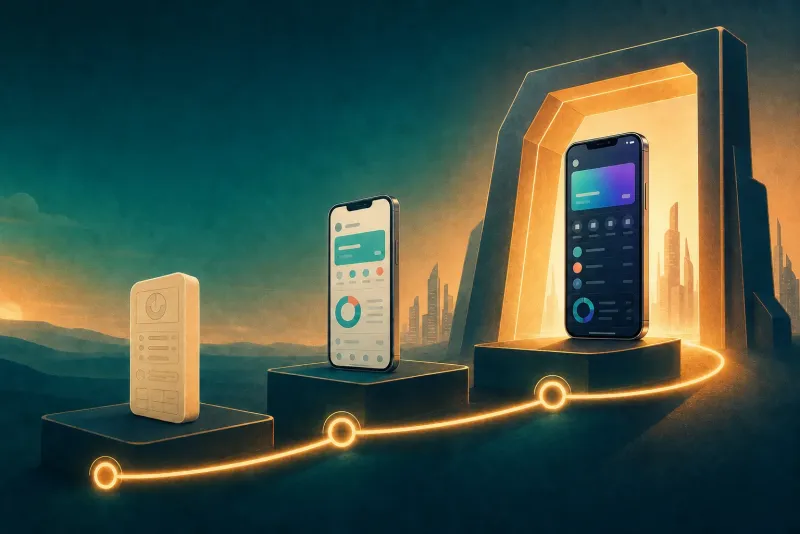
Most neobanks move up this ladder as they grow. Few start at the top.
Route 1
On a partner’s licence
Launch through a BaaS provider or as an EMI agent. Fastest start, least control over product and pricing.
When it fitsRoute 2
Your own EMI licence
Hold customer money yourself, safeguarded. More control, but capital, compliance staff and months of preparation. 3
When it fitsRoute 3
A full banking licence
Take deposits, lend and offer deposit insurance. The most control and the heaviest capital and regulatory load.
Neobanks in the UK, EU and Gulf
| Market | Common routes | Worth knowing |
|---|---|---|
| United Kingdom | EMI agent, small or authorised EMI, or a bank authorised by the PRA and FCA | Deposits at UK banks are covered by the FSCS up to a limit. E-money is not. 2 New banks can start with a restricted licence while they build up, known as mobilisation |
| European Union | EMI or credit institution licensed in one member state | A licence from one country can be passported across the EEA, which is why many neobanks pick one home market first |
| UAE | Partnership with a licensed bank, a stored value licence for wallets, or a digital bank licence from the CBUAE | Free zones such as DIFC and ADGM have their own regulators and rules |
| Saudi Arabia | Digital bank licence or a payment or e-money licence from SAMA | SAMA has licensed several digital banks, and its fintech programmes support newer entrants |
A UK set-up does not copy straight into the Gulf. Read MENA neobank MVP features for what Gulf founders prioritise.
Example: a neobank for nurses
Kemi wants to build a UK neobank for agency nurses, who are paid weekly by several agencies.
- Route. She has no licence, so she launches as the agent of a UK EMI that provides accounts, sort codes and cards.
- Product. Her app adds what nurses actually need: one view of pay from every agency, a tax pot, and instant payslip matching.
- Money. Salaries land in each customer’s account at the EMI and are safeguarded. Kemi’s app shows the balance and her ledger mirrors it.
- Growth. Two years in, with steady volumes and working controls, she starts preparing her own EMI application, keeping the same app and customers.
Common misconceptions
“Every neobank is a bank.”
Many are EMIs or run on a partner’s licence. Check the small print in the app to see who actually holds the money.
“A neobank is just a nice app.”
The app is the visible part. Most of the work is in the ledger, compliance, reconciliation, partner integrations and support tools behind it.
“You need a banking licence to launch.”
Most neobanks launch without one. See how to build a neobank MVP for a realistic path.
FAQ
What is a neobank?
A financial app that offers bank-like services, such as an account, a card and transfers, entirely online, with no branches. Some hold a full banking licence, but many run on an EMI licence or on a partner bank's licence.
Is a neobank a real bank?
Only if it holds a banking licence. Many neobanks are e-money institutions or work under a partner's licence. In the UK, a firm cannot call itself a bank unless it is authorised to take deposits.
Is my money safe in a neobank?
It depends on the licence. Money in a licensed bank is covered by deposit insurance up to a limit. Money held by an EMI is safeguarded, kept separate from the firm's own money, but it is not covered by deposit insurance.
What is the difference between a neobank and a digital bank?
The terms are often used for the same thing. Digital bank sometimes means a fully licensed bank that operates online only, while neobank is the broader term that also covers app-based services running on an EMI licence or a partner.
How much does it cost to start a neobank?
It varies widely with the route. Launching on a BaaS partner or as an EMI agent avoids licence capital and needs mainly product, compliance and partner costs. An EMI licence needs at least 350,000 euros of capital in the UK and EU, and a banking licence far more.
How long does it take to launch a neobank?
On a partner's licence, a focused first version can go live in a few months. With your own EMI licence, plan for most of a year. A full banking licence usually takes several years.
Related terms
Sources
-
1
FC
Financial Conduct Authority Financial Conduct Authority
https://www.fca.org.uk -
2
FS
Financial Services Compensation Scheme FSCS
https://www.fscs.org.uk -
3
LG
legislation.gov.uk The Electronic Money Regulations 2011
https://www.legislation.gov.uk/uksi/2011/99/contents