In plain words
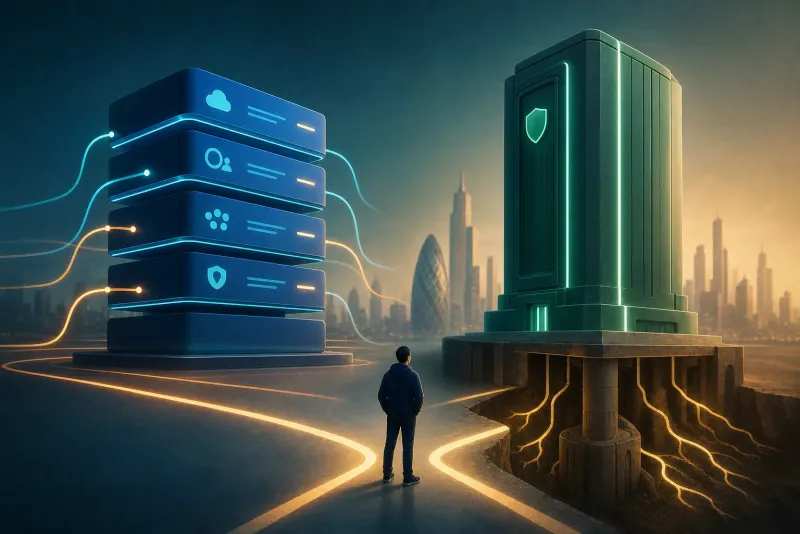
Think of a bank as a warehouse that lends out part of what you store there. An EMI is more like a locker: your money sits there untouched, ready for you to spend, send or take back, but nobody borrows it in the meantime.
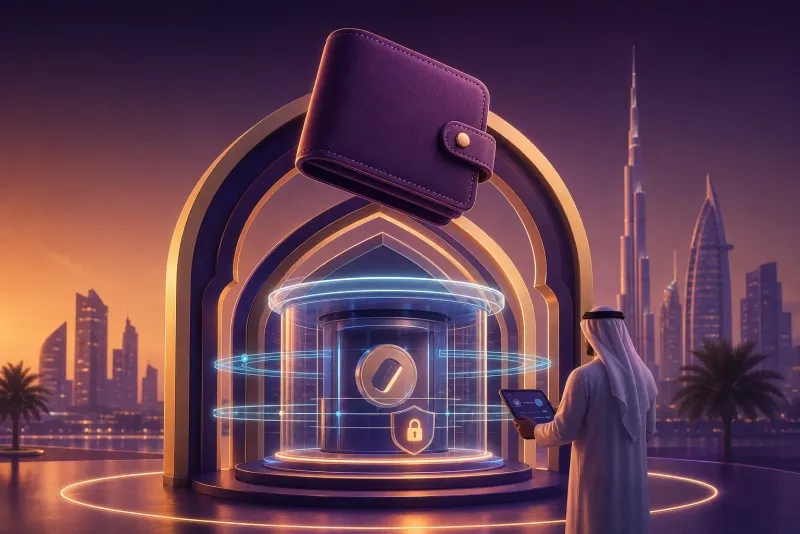
When you pay £100 into an EMI, it gives you £100 of e-money, shown as your balance in the app. The real £100 is kept in a separate safeguarding account. Every card payment or transfer you make simply moves that e-money, and you can turn it back into money in your bank account at any time.
How it works
How an EMI works
What you see in the app on top. Where the money really is underneath.
-
1
You pay in £100
By bank transfer to your account number or IBAN, or by topping up with a card.
-
2
The EMI issues £100 of e-money
Exactly one for one. It shows up as your balance in the app.
-
3
The real £100 is safeguarded
It sits in a separate account at a bank, apart from the EMI’s own money. The EMI cannot lend it or invest it in risky assets.
-
4
You spend, send or withdraw
Card payments, transfers and withdrawals redeem the e-money at face value, and the safeguarded money moves with them.
What an EMI can and cannot do
Can
- Hold customer balances as e-money
- Give customers an account number or IBAN
- Issue debit and prepaid cards
- Send and receive transfers, at home and abroad
- Exchange currencies
- Offer payment services such as merchant acquiring
Cannot
- Take deposits the way a bank does
- Lend out customer money
- Pay interest on e-money balances
- Offer deposit insurance (in the UK, the FSCS)
- Call itself a bank
EMI vs bank
The difference that matters most is what happens to your money while it sits there. A bank puts it to work. An EMI must leave it alone.
| EMI | Bank | |
|---|---|---|
| What it does with your money | Keeps it safeguarded, separate from its own funds | Lends part of it out |
| Interest on balances | Not allowed | Allowed |
| If the firm fails | Safeguarded money is returned to customers | Deposit insurance pays out up to a limit |
| Minimum capital | €350,000 (UK and EU authorised EMI) | Much higher, set by the regulator |
| Time to licence | Typically months | Typically years |
| Typical users | Neobanks, wallets, payment and remittance apps | Full-service and challenger banks |
Three ways to run an EMI in the UK
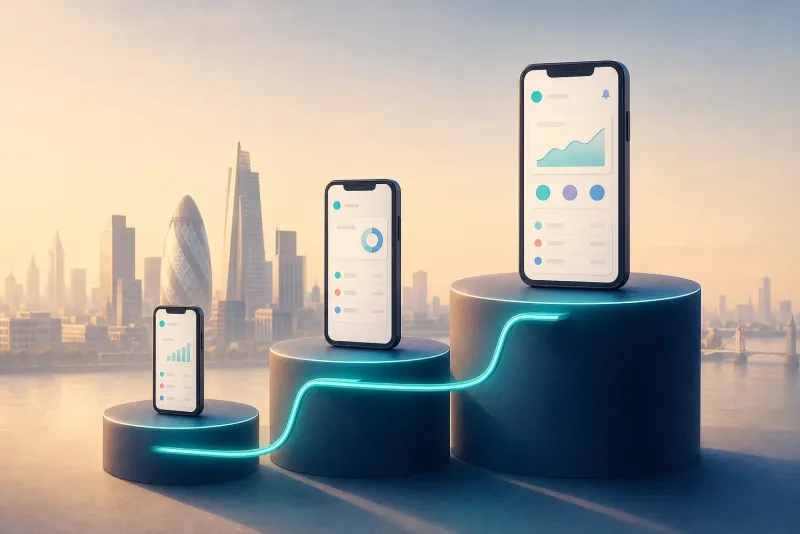
You do not have to hold a licence on day one. In the UK, founders usually move along this ladder as the business grows.
Step 2
Your own registration, capped at €5 million of average outstanding e-money and UK only.
When it fitsFor a side-by-side comparison, read EMI agent vs SEMI vs AEMI.
What it takes to get an EMI licence
In the UK you apply to the FCA. The regulator is not only checking a form: it is checking that you can run a regulated business safely from day one. A full application covers six areas. 2
Capital
At least €350,000 of initial capital, plus own funds that grow as the e-money you hold grows.
People
Directors and managers who pass the FCA’s fit and proper test, a named MLRO, and checks on anyone who owns or controls the firm.
Business plan
A programme of operations and financial forecasts that show what you will do, for whom, and how the numbers work.
Safeguarding
How customer money will be kept separate, where it will be held, and how you will reconcile it every day.
Policies and controls
Anti-money-laundering, risk management, security, incident reporting and complaints handling, written down and actually working.
Technology and partners
The systems you run, the suppliers you rely on, how you oversee them, and a plan to wind down safely if needed.
How long it takes
- PrepareWrite the application, build the policies, hire key people, line up capital and a safeguarding bank. This usually takes longer than the review itself.
- SubmitThe application goes to the FCA through its online system, with the application fee.
- FCA reviewBy law the FCA must decide within 3 months of a complete application, or within 12 months if it is incomplete. Questions from the FCA restart the work on your side. 1
- Go liveOnce authorised, you can issue e-money in your own name, provided your product, partners and controls are ready too.
Plan the whole process in months, not weeks, and build the product in parallel so that both are ready at the same time.
After the licence
Authorisation is the start of the obligations, not the end. An EMI must keep meeting them every day:
- Reconcile safeguarded money daily and have safeguarding audited
- Keep enough capital as the business grows
- Send regular reports to the FCA and tell it about major incidents and changes of ownership
- Run anti-money-laundering checks and transaction monitoring on every customer
- Meet the FCA’s Consumer Duty and operational resilience rules
For the controls the FCA looks at most closely, read UK launch readiness beyond the FCA checklist and why UK neobanks fail FCA approval.
EMIs in the UK, EU, UAE and Saudi Arabia
The idea is the same everywhere: hold customer money safely, move it, do not lend it. The name of the licence and the regulator change.
| Market | What it is called | Regulator | Main rulebook |
|---|---|---|---|
| United Kingdom | Authorised EMI or small EMI | FCA | Electronic Money Regulations 2011 1 |
| European Union | Electronic money institution | The national regulator of the home country | E-Money Directive (2009/110/EC). One licence can be passported across the EEA 3 |
| UAE (mainland) | Stored Value Facility (SVF) | CBUAE | CBUAE Stored Value Facilities Regulation 5 |
| Saudi Arabia | Electronic money institution | SAMA | Law of Payments and Payment Services 4 |
United Kingdom
The FCA authorises EMIs under the Electronic Money Regulations 2011, either as a full authorised EMI or a small EMI. Since Brexit a UK licence covers the UK only: serving EU customers needs a separate EU licence. Safeguarding rules are also getting stricter, with new FCA requirements applying from May 2026. 1
European Union
Each EU country applies the E-Money Directive through its own law and regulator. An EMI licensed in one country can passport its services to customers across the European Economic Area, which is why many fintechs pick one home country for their EU licence. Under the EU’s MiCA rules, EMIs are also one of the two types of firm allowed to issue euro or other single-currency stablecoins, known as e-money tokens. 3
Saudi Arabia
Saudi Arabia uses the same name. SAMA, the Saudi Central Bank, licenses electronic money institutions and payment institutions under the Law of Payments and Payment Services and its implementing regulations. The rules follow the same idea as in the UK: customer money must be protected and kept apart, and it cannot be lent out. 4
Three things are different in practice. Many fintechs start in SAMA’s regulatory sandbox, testing with real customers under a temporary permit before applying for a full licence. Expect to need a locally incorporated company with local management. And a Saudi wallet is only useful if it connects to local rails: instant transfers through SARIE and card payments through mada, both national systems owned by SAMA.
United Arab Emirates
In the UAE the same idea goes by a different name. If you are looking for an “EMI licence” in the UAE, what you usually need is a Stored Value Facility (SVF) licence from the Central Bank of the UAE. It covers wallets that hold customer money in advance. Payment services that do not hold balances, such as payment initiation or merchant acquiring, are licensed separately under the Central Bank’s retail payment services rules. 5
The two financial free zones are separate again. Dubai’s DIFC is regulated by the DFSA and Abu Dhabi’s ADGM by the FSRA. Each grants its own permission for money services, with its own rules on whom you can serve. Choosing between mainland and a free zone is one of the first decisions for a UAE launch. Read more in when a wallet product triggers heavier regulation in the UAE and why UK EMI models do not map directly to the UAE.
Example: one salary, end to end
Lina uses a neobank app that runs on an EMI licence. Here is what happens to her £2,000 salary.
- Payday. Her employer pays £2,000 to the IBAN shown in her app. The EMI credits her with £2,000 of e-money.
- Behind the scenes. The £2,000 lands in the EMI’s safeguarding account at a partner bank. The EMI checks every day that the money held there matches what it owes its customers.
- Coffee. Lina pays £4 with her card. Her e-money drops to £1,996, and £4 leaves the safeguarding account to settle with the café’s acquirer.
- If the EMI failed. Lina’s £1,996 is not lent out or mixed with the company’s money, so an administrator returns it from the safeguarding account, minus the administrator’s costs.
Common misconceptions
“An EMI is just a small bank.”
No. It cannot lend or pay interest, and its customers are protected by safeguarding, not deposit insurance.
“E-money is not real money.”
It is a claim on real money, backed one for one and redeemable at face value whenever the customer asks.
“You need your own EMI licence to launch.”
Many products start as an EMI agent or on BaaS, and apply for a licence once the model is proven. See BaaS vs EMI for neobanks.
FAQ
Is an EMI a bank?
No. A bank can take deposits and lend them out, and its customers are covered by deposit insurance. An EMI can only hold customer money as e-money and move it. It cannot lend that money or pay interest on it, and it protects customers through safeguarding instead of deposit insurance.
Is my money safe with an EMI?
An EMI must safeguard customer money: keep it separate from its own funds, usually in a dedicated account at a bank, so it can be returned if the EMI fails. It is not covered by the UK Financial Services Compensation Scheme, so the protection depends on the EMI keeping that separation correctly.
Can an EMI issue cards and IBANs?
Yes. EMIs commonly give customers an account number or IBAN, a debit card through a card scheme membership or a BIN sponsor, and the ability to send and receive transfers. This is why many neobanks launch as EMIs.
How long does it take to get an EMI licence?
In the UK, the FCA must decide within three months of receiving a complete application, or within twelve months if it is incomplete. Preparing a strong application takes months on its own, so plan the whole process in months, not weeks.
What do you need to apply for an EMI licence?
At least €350,000 of initial capital, fit and proper directors and an MLRO, a business plan, safeguarding arrangements, written policies for anti-money-laundering, risk, security, incidents and complaints, and a clear picture of your technology and suppliers.
How much capital does an EMI need?
In the UK and the EU, an authorised EMI needs at least €350,000 of initial capital, plus ongoing own funds that grow with the amount of e-money it holds. A UK small EMI has lower requirements but strict volume limits.
Do I need my own EMI licence to launch a fintech product?
Not always. Many products launch as an EMI agent under another firm's licence, or through a Banking-as-a-Service partner, and apply for their own licence once volumes and the business model are proven.
Sources
-
1
LG
legislation.gov.uk The Electronic Money Regulations 2011
https://www.legislation.gov.uk/uksi/2011/99/contents -
2
FC
Financial Conduct Authority Payment Services and Electronic Money: Our Approach PDF
https://www.fca.org.uk/publication/finalised-guidance/fca-approach-payment-services-electronic-money-2017.pdf -
3
EL
EUR-Lex Directive 2009/110/EC on electronic money institutions
https://eur-lex.europa.eu/eli/dir/2009/110/oj -
4
SC
Saudi Central Bank (SAMA) Regulator of banks, payment and e-money institutions in Saudi Arabia
https://www.sama.gov.sa/ -
5
CB
Central Bank of the UAE Regulator of stored value facilities and payment services in the UAE
https://www.centralbank.ae/