In plain words
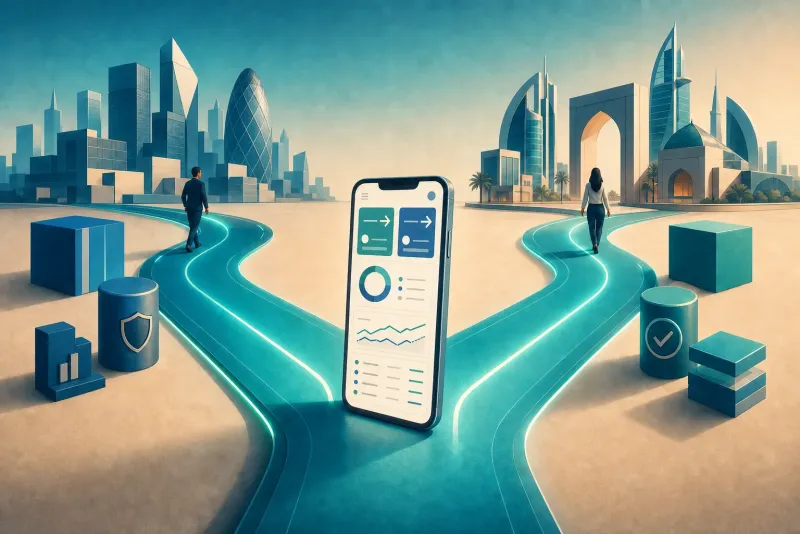
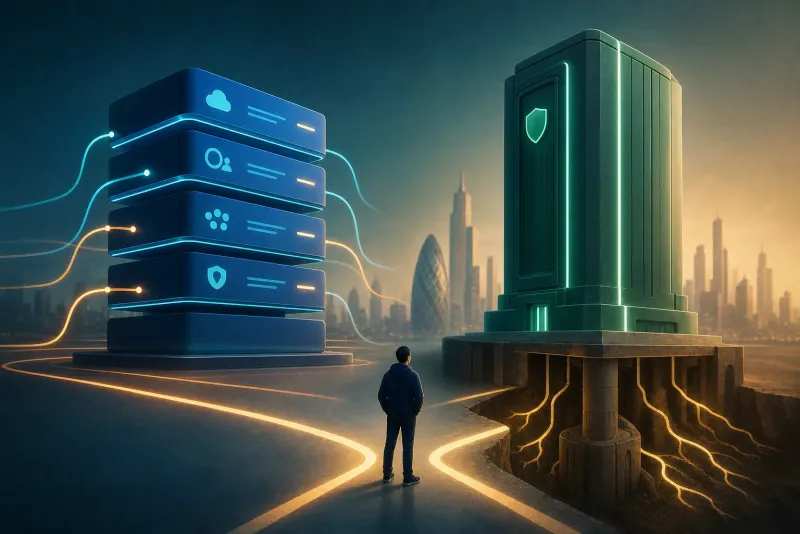
Think of a courier and a safe-deposit box. A courier picks up your parcel and delivers it, and only holds it for as long as the journey takes. A safe-deposit box keeps things for you until you want them. A payment institution is the courier. An EMI is the courier with a safe-deposit box attached.
A payment institution, or PI, is a firm licensed to provide payment services: sending money abroad, accepting card payments for merchants, paying bills, initiating payments from a bank account. In the UK, PIs are authorised or registered by the FCA under the Payment Services Regulations 2017. 1
What a PI cannot do is issue e-money. It can hold customer money only as part of carrying out a payment, not as a balance the customer keeps for weeks and spends later. That single difference decides whether your product needs a PI or an EMI.
How it works
How a payment institution moves money
A money transfer from start to finish.
-
1
The customer sends money
They pay the PI by bank transfer or card, with an instruction: send £500 to a family member abroad.
-
2
The PI safeguards the funds
While the payment is in progress, the money is kept separate from the PI’s own, in a safeguarding account or covered by insurance. 3
-
3
The PI executes the payment
It converts currency if needed and sends the money through its banking partners and payment rails.
-
4
The money arrives and the job ends
Once the recipient is paid, the PI holds nothing more for that customer. No balance is left sitting there.
PI vs EMI
Both are regulated, both safeguard customer money, and both are supervised by the FCA in the UK. The difference is what the customer is left holding.
| Payment institution | Electronic money institution | |
|---|---|---|
| Core activity | Moving money | Issuing e-money and moving it |
| Stored balances | No, funds held only to carry out payments | Yes, customers keep e-money balances |
| Initial capital (authorised) | €20,000 to €125,000, depending on services | €350,000 |
| Small firm option in the UK | Small PI, up to €3M monthly average payments | Small EMI, up to €5M average outstanding e-money |
| Typical products | Remittance, merchant acquiring, bill payments, payment initiation | Wallets, neobank accounts, prepaid cards |
A common trap: a transfer product adds a “keep your balance in the app” feature. That turns funds held for a payment into stored value, which can tip the business into e-money territory and need an EMI licence.
The UK options
Lightest
Registered account information provider
For firms that only offer account information services. Registration rather than full authorisation, no initial capital, but professional indemnity insurance is needed.
Small
Small payment institution
Registered with the FCA. Monthly average payment volume within €3 million, UK only, no passport. Safeguarding is optional. 2
Full
Authorised payment institution
No volume cap. Initial capital of €20,000 for money remittance only, €50,000 for payment initiation only, €125,000 for other services. Safeguarding required.
PI or EMI: three questions
Most founders can find the right answer by being honest about three questions.
- Will customers keep money with you between payments? If yes, for more than the time needed to complete a payment, you are probably looking at e-money and an EMI.
- Will you issue cards that customers load in advance? Prepaid cards usually mean e-money.
- Is your product only about getting money from A to B? Transfers, acquiring and payment initiation fit a PI.
If the honest answer is “not yet, but later”, plan for the licence your product will need, not the one it needs on launch day.
UK, EU and Gulf
| Market | What it is called | Rulebook |
|---|---|---|
| United Kingdom | Authorised or small payment institution | Payment Services Regulations 2017, which came from PSD2 |
| European Union | Payment institution | PSD2, implemented by each country. An authorised PI can passport across the EEA. 4 |
| UAE | Retail payment services licences from the CBUAE, in several categories | CBUAE retail payment services rules. Free zones have their own regimes. |
| Saudi Arabia | Payment institution licensed by SAMA | Law of Payments and Payment Services |
The EU is also reworking these rules through PSD3 and the Payment Services Regulation, which are expected to bring PIs and EMIs closer together. For the Gulf picture, see UAE payment licences explained.
Example: a remittance app picks its licence
Grace is building an app for UK nurses to send money home to Ghana and Kenya.
- The question. Do customers need to keep a balance in the app? Her research says no: they send money on payday and are done.
- The licence. She applies to be an authorised PI for money remittance, which needs €20,000 of initial capital rather than the €350,000 an EMI would need.
- The flow. Each transfer is safeguarded while in progress, converted and paid out through partners in each country.
- The line she does not cross. When the team suggests a “save for next month” balance, she checks with her compliance adviser first, because that feature could need an e-money licence.
Common misconceptions
“A PI and an EMI are the same thing.”
Every EMI can provide payment services, but a PI cannot issue e-money. The licence follows the product.
“Small PIs must safeguard like everyone else.”
In the UK, safeguarding is optional for small PIs. Many choose it anyway, because partners and customers expect it.
“A PI licence is a cheap EMI licence.”
It is cheaper because it allows less. Add stored balances and you may need to re-apply as an EMI.
FAQ
What is a payment institution?
A payment institution (PI) is a firm licensed to provide payment services, such as money transfers, merchant acquiring or bill payments. It can move customers' money but cannot issue e-money, take deposits or lend customer funds.
What is the difference between a PI and an EMI?
Both can move money. An EMI can also issue e-money, so customers can keep a balance and spend it later. A PI can hold funds only to carry out payments, which suits transfer and acquiring businesses but not wallets with lasting balances.
What is the difference between an authorised PI and a small PI?
An authorised PI has no volume cap, holds initial capital set by the services it offers and can apply for every payment service. A small PI is registered rather than authorised, must keep its monthly average payment volume within €3 million and serves the UK only.
How much capital does a payment institution need?
In the UK and the EU, an authorised PI needs €20,000 if it only offers money remittance, €50,000 if it only offers payment initiation, and €125,000 for other payment services. A small PI has no fixed initial capital requirement.
Does a payment institution have to safeguard customer money?
An authorised PI must safeguard customer funds. A small PI does not have to, but can choose to, and then must meet the same standard as an authorised PI.
Do I need a PI licence to offer open banking services?
Payment initiation is a payment service and needs authorisation. Firms that only offer account information services can register with the FCA as an account information service provider instead of becoming a full PI.
Related terms
Sources
-
1
LG
legislation.gov.uk The Payment Services Regulations 2017
https://www.legislation.gov.uk/uksi/2017/752/contents -
2
FC
Financial Conduct Authority Electronic money and payment institutions
https://www.fca.org.uk/firms/electronic-money-payment-institutions -
3
FC
Financial Conduct Authority Safeguarding requirements for payment institutions and e-money institutions
https://www.fca.org.uk/firms/emi-payment-institutions-safeguarding-requirements -
4
EL
EUR-Lex Directive (EU) 2015/2366 on payment services (PSD2)
https://eur-lex.europa.eu/eli/dir/2015/2366/oj