In plain words
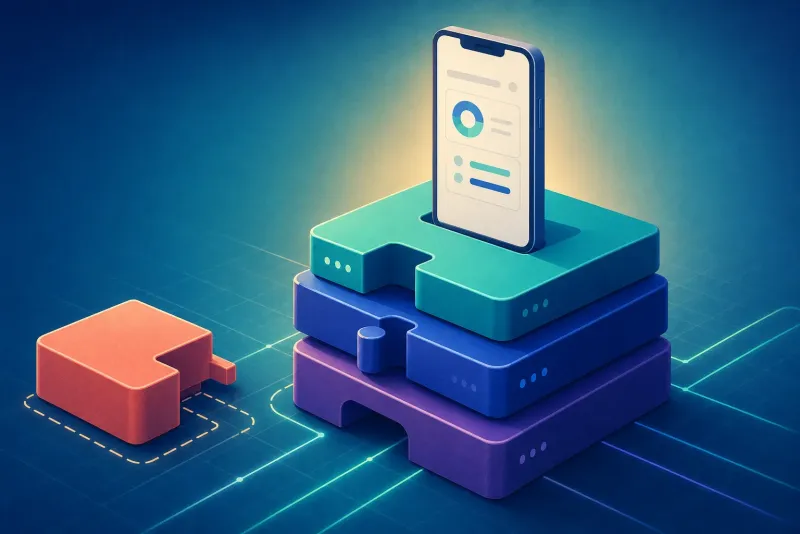
Think of an office building with one post room. Every tenant has their own address on the door, but all the post arrives at the same post room, which sorts it by name and passes it on. Nobody outside can tell that the letters share one entrance.
A virtual IBAN works the same way. It looks exactly like a normal IBAN, so anyone can send money to it. But there is no separate bank account behind it. Payments land in one shared master account, and the issuer’s system reads which virtual IBAN the payment was sent to and credits the right customer, wallet or invoice in its ledger.
This lets a company give thousands of customers their own account numbers without opening thousands of bank accounts. It is one of the building blocks behind many wallets, business accounts and collection services.
How it works
How a virtual IBAN routes a payment
One master account at the bank. Many numbers on top.
-
1
A customer gets a virtual IBAN
The issuer creates a unique IBAN from its bank’s range and links it to the customer in its own records.
-
2
Someone sends money to it
The sender’s bank sees an ordinary IBAN and sends the payment as usual.
-
3
The money lands in the master account
The bank credits the master account, and passes on which virtual IBAN the payment was addressed to.
-
4
The ledger credits the right customer
The issuer’s ledger matches the virtual IBAN to the customer and updates their balance. The ledger, not the bank, records whose money is whose.
Who can issue virtual IBANs
Only a bank or other firm with access to a payment system can create IBANs in the first place. 3 Virtual IBANs reach a product through one of these routes.
| Issuer | How it works | Typical users |
|---|---|---|
| A bank, directly | The bank issues virtual IBANs on a corporate client’s master account | Large companies collecting many payments |
| An EMI or payment institution | It holds a master account, often its safeguarding account, at a partner bank, and issues virtual IBANs to its own customers | Wallets, business accounts, payment apps |
| A BaaS provider | It passes virtual IBANs from its own bank or licence through APIs to brands built on top | Neobanks and platforms launching without a licence |
Whatever the route, a licensed bank sits at the bottom of the chain. If any link changes, the virtual IBANs above it can change too.
What virtual IBANs are used for
Per-customer accounts
Each wallet or business customer gets their own IBAN to receive salary, client payments or top-ups.
Collections
A unique IBAN per payer or invoice makes it obvious who paid, without relying on a reference typed by the sender.
Reconciliation
Incoming payments match themselves to customers automatically, so reconciliation becomes a check, not a manual task.
Multi-currency and local details
A firm can give customers account details in other currencies or markets through a master account there, as part of a multi-currency account.
Virtual IBANs in the UK, EU and Gulf
There is no single rulebook for virtual IBANs. They sit inside the general rules on payments, safeguarding and anti-money-laundering, and treatment is still developing, so check the current position with your partner and your lawyers.
- European Union. Virtual IBANs have drawn attention because the country code may not match where the master account is held or where the customer lives. The European Banking Authority (EBA) has looked at the money-laundering risks, and the EU’s newer anti-money-laundering rules aim to bring virtual IBANs into national bank account registers so authorities can trace them. 1 Separately, the SEPA Regulation stops payers and payees from refusing a euro account just because it is in another SEPA country, which helps customers whose virtual IBAN carries a foreign country code. 2
- United Kingdom. Virtual account numbers are widely used for collections and by EMIs and payment firms. Firms still have to meet the FCA’s safeguarding, record-keeping and anti-money-laundering rules for the money that flows through them.
- Gulf. Banks in the UAE and Saudi Arabia offer virtual account numbers to corporate clients, mainly for collections. Whether a fintech can pass them on to its own customers depends on its licence and its partner bank, so confirm this early.
Example: rent collection for a letting agent
Tom runs a lettings platform in the Netherlands that collects rent for landlords from hundreds of tenants.
- Set-up. His payment partner, an EMI, issues a virtual IBAN for every tenancy, all routing to one safeguarded master account.
- Rent day. Each tenant pays to their own IBAN. Many forget the payment reference, but it no longer matters.
- Matching. Tom’s ledger reads the virtual IBAN on each payment and marks the right tenancy as paid within minutes.
- Payout. The platform pays each landlord from the master account, minus its fee, with a statement that ties every euro to a tenant.
Common misconceptions
“A virtual IBAN is a fake IBAN.”
It is a real, valid IBAN that receives real payments. What is virtual is the account behind it, which is shared.
“The IBAN country is where the money is held.”
Not always. The country code comes from the bank that provides the IBAN range, which may differ from where the master account sits or where the customer lives.
“Our virtual IBANs move with us if we change partner.”
They belong to the partner’s range. A partner change usually means new numbers for every customer. See BaaS is your biggest hidden risk.
FAQ
What is a virtual IBAN?
An IBAN that is not linked to its own bank account. Payments sent to it land in a master account, and the issuer's systems use the virtual IBAN to tell which customer or invoice each payment belongs to.
What is the difference between a virtual IBAN and a normal IBAN?
A normal IBAN points to its own account at a bank. A virtual IBAN looks exactly the same to the sender but routes money into a shared master account, where the balance for each virtual IBAN is tracked in the issuer's ledger.
Are virtual IBANs safe?
The money is as safe as the master account and the firm that runs it. If the issuer is an EMI or payment institution, customer funds in the master account should be safeguarded. The main risk is records: the issuer's ledger must show exactly whose money is whose.
Who can issue virtual IBANs?
Banks issue them, either for their own clients or through partners. EMIs, payment institutions and BaaS providers often offer them to their customers using a master account at a partner bank, which provides the IBAN range.
Can I receive salary on a virtual IBAN?
Usually yes, because the sender sees a normal IBAN. Some payers have rejected IBANs from a different country than the customer's own, even though EU rules forbid that for euro payments within SEPA.
Why are regulators looking at virtual IBANs?
Because the country code in a virtual IBAN may not match where the money is held or who controls it, which can make it harder to trace funds. EU authorities have looked at the risks, and the EU's newer anti-money-laundering rules aim to make virtual IBANs traceable in national account registers.
Sources
-
1
EB
European Banking Authority European Banking Authority
https://www.eba.europa.eu -
2
EL
EUR-Lex Regulation (EU) No 260/2012 establishing requirements for credit transfers and direct debits in euro (SEPA)
https://eur-lex.europa.eu/eli/reg/2012/260/oj -
3
S
SWIFT IBAN: International Bank Account Number and the IBAN Registry
https://www.swift.com/standards/data-standards/iban-international-bank-account-number