In plain words
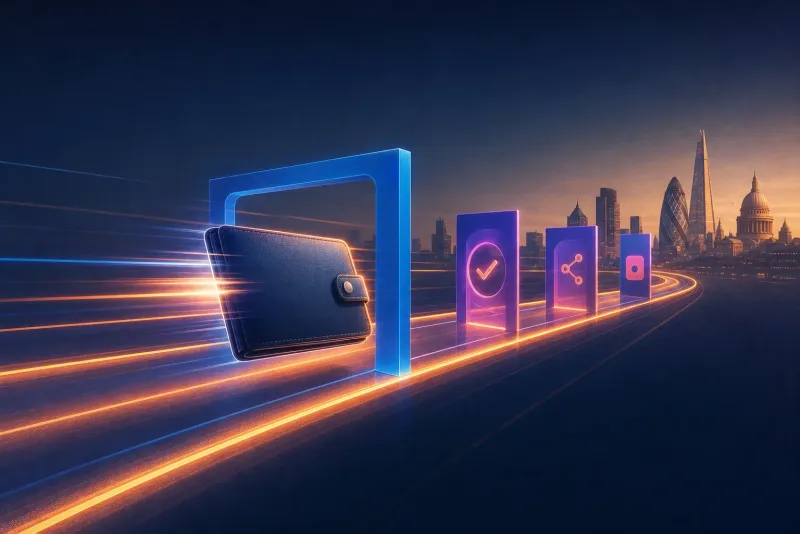
Imagine if every country in Europe used the same plug socket. You could take any device anywhere and it would just work. SEPA does that for euro payments: one account format, one set of rules and one price level, whether you pay someone in your own town or in another country.
Before SEPA, sending euros from Germany to Spain was an international payment, with its own forms, fees and delays. SEPA turned it into a domestic one. A payer needs only the payee’s IBAN and name, the money arrives by the next business day or within seconds, and the bank cannot treat a foreign euro IBAN differently from a local one. 3
SEPA is not a single computer system. It is a set of shared rulebooks, called schemes, written by the European Payments Council (EPC), plus EU laws that make banks follow them. Banks and payment firms sign up to the schemes, and clearing houses carry the payments between them. 1
How it works
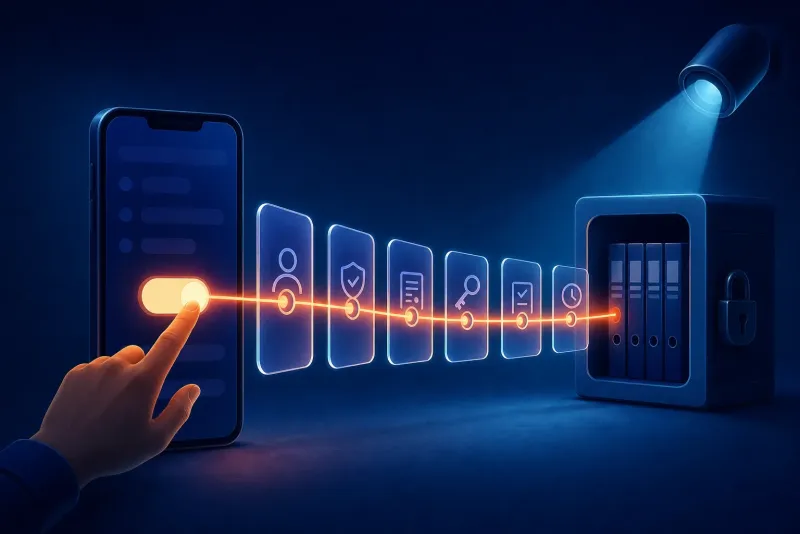
How a SEPA transfer moves
The same rulebook applies whether the payee is next door or in another SEPA country.
-
1
You enter an IBAN and name
No bank code, no routing number. Your bank runs Verification of Payee and shows whether the name matches the IBAN.
-
2
Your bank sends a standard message
Every SEPA payment uses the same ISO 20022 message format, so any bank in the scheme can read it.
-
3
A clearing house routes it
The payment goes through a clearing system to the payee’s bank. Instant payments settle in central bank money through the Eurosystem’s TIPS service or in private systems.
-
4
The payee is credited
By the next business day for a standard transfer, or within 10 seconds for an instant one.
The three SEPA schemes
When people say “SEPA”, they usually mean one of three schemes. A euro account product normally needs the first two, and the third if customers pay bills or subscriptions.
| SEPA Credit Transfer | SEPA Instant | SEPA Direct Debit | |
|---|---|---|---|
| Who starts it | The payer | The payer | The payee, with the payer’s mandate |
| Speed | By the next business day | Within 10 seconds | On the agreed collection date |
| Hours | Business days | 24/7, every day | Business days |
| Can it be reversed | No, only a recall request | No, only a recall request | Consumers can claim a refund within eight weeks |
| Typical use | Salaries, invoices, transfers | Person-to-person and urgent payments | Utility bills, subscriptions, loan repayments |
The Instant Payments Regulation and Verification of Payee
For years, SEPA Instant was optional and many banks did not offer it. The EU’s Instant Payments Regulation, adopted in 2024, changed that. 2
- January 2025Banks in the euro area had to be able to receive instant euro transfers.
- October 2025They also had to be able to send them, at a price no higher than a standard transfer, and to run Verification of Payee on every euro transfer.
- 2027Later deadlines apply to banks in EU countries outside the euro area, and to EMIs and payment institutions.
Verification of Payee is the EU’s answer to UK Confirmation of Payee. Before a euro transfer goes, the payer’s bank checks the name against the IBAN with the payee’s bank and shows a match, a close match or no match. The payer can still go ahead, but now knows the risk.
If your product sends euros, instant and name checks are now the expected default in the euro area. A payment flow designed around next-day transfers and no name check will feel out of date to European customers, and may not meet the rules your licensed partner has to follow.
SEPA from the UK, the EU and the Gulf
| Where you are | How SEPA works for you |
|---|---|
| European Union | Full participation. EU law requires banks to accept any euro IBAN in the EU and EEA, and euro-area banks must offer instant transfers and Verification of Payee. |
| United Kingdom | The UK is still in the scheme’s geographic scope, so UK banks and payment firms can join the schemes or reach them through a partner. Payments between the UK and the EU carry extra payer details, such as a full address. Pounds still move on Faster Payments. |
| UAE and Saudi Arabia | Not part of SEPA. Euro payments from the Gulf to Europe usually travel over SWIFT through correspondent banks, or through a provider that holds euro accounts in Europe and pays out locally on SEPA. |
Many UK and Gulf fintechs give customers euro IBANs through an EU or UK partner that is already in the schemes. That is often the fastest way to offer euro accounts without joining SEPA yourself.
For how euro payments to and from the Gulf travel when SEPA is not available, read SWIFT, ISO 20022 and the future of cross-border fintech products.
Example: a UK app adds euro accounts
Sofia runs a UK app for freelancers. Many of her customers invoice clients in France and Germany and want to be paid in euros.
- The partner. Sofia’s payment provider is in the SEPA schemes and can issue euro IBANs, so each customer gets one inside the app.
- Getting paid. A client in Lyon pays a €1,500 invoice to the freelancer’s IBAN by SEPA Instant. The money shows in the app within seconds, with the invoice reference.
- Converting. The freelancer converts €1,000 to pounds in the app and keeps €500 in euros for later.
- Paying a supplier. She pays a supplier in Berlin from her euro balance. Verification of Payee returns a close match, the app shows the supplier’s registered name, and she confirms before sending.
Common misconceptions
“SEPA is only for EU countries.”
The schemes also cover the EEA and several other countries, including the UK and Switzerland.
“SEPA moves any European currency.”
The SEPA schemes carry euros only. Pounds, Swiss francs or Polish zloty move on their own domestic systems.
“A SEPA transfer is always instant now.”
Standard SEPA Credit Transfers still exist and take up to a business day. Instant is a separate scheme, and not every firm outside the euro area offers it yet.
FAQ
How long does a SEPA transfer take?
A standard SEPA Credit Transfer arrives by the next business day at the latest. A SEPA Instant transfer arrives within 10 seconds, at any time of day, every day of the year.
Which countries are in SEPA?
All 27 EU countries, plus Iceland, Liechtenstein, Norway, Switzerland, the UK, Monaco, San Marino, Andorra and Vatican City. More European countries outside the EU have been admitted to the schemes since 2024, so check the European Payments Council's current list.
Is the UK still in SEPA after Brexit?
Yes. UK banks and payment firms can still take part in the SEPA schemes. Payments between the UK and the EU need some extra payer information, such as a full address, because the UK is outside the EU.
Is SEPA Instant free?
Not always, but in the euro area the Instant Payments Regulation says a bank cannot charge more for an instant euro transfer than for a standard one.
What is Verification of Payee?
Since October 2025, euro-area banks must check that the name of the person you are paying matches the IBAN before you send a euro transfer, and warn you if it does not. It is the EU equivalent of the UK's Confirmation of Payee.
Can a SEPA payment be reversed?
A SEPA credit transfer, including an instant one, is final once sent, although the sender's bank can ask for a recall. A SEPA Direct Debit is different: consumers can ask for a refund of an authorised debit within eight weeks.
Related terms
Sources
-
1
EP
European Payments Council European Payments Council: SEPA payment schemes
https://www.europeanpaymentscouncil.eu/ -
2
EL
EUR-Lex Regulation (EU) 2024/886 on instant credit transfers in euro
https://eur-lex.europa.eu/eli/reg/2024/886/oj -
3
EL
EUR-Lex Regulation (EU) No 260/2012 establishing technical and business requirements for credit transfers and direct debits in euro
https://eur-lex.europa.eu/eli/reg/2012/260/oj