In plain words
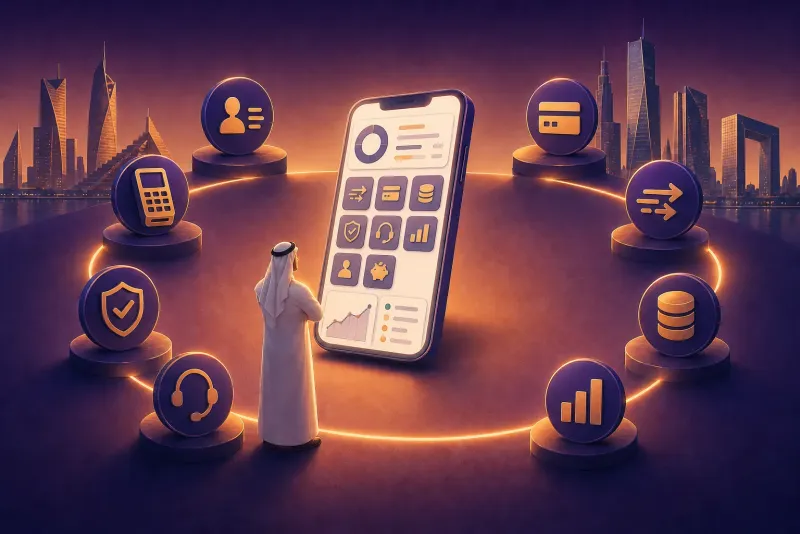
Aani is the UAE’s way of sending money as easily as sending a text message. You type a friend’s mobile number, confirm, and the dirhams arrive in their account at another bank within seconds, at any hour. No IBAN, no waiting for the next working day. 1
Behind it sits Al Etihad Payments, a company the Central Bank of the UAE created in 2023 as part of its national payment systems strategy. Aani launched the same year, and the same company now also runs the UAE’s domestic card scheme, Jaywan. 2
If you know the UK, think of Aani as the local version of Faster Payments, with extra features built in from the start: payments by mobile number or QR code, requests for payment and bill splitting. It is used by customers of licensed financial institutions and other payment service providers in the UAE, through their own apps or the Aani app.
How it works
How an Aani payment works
A mobile number in the app. A bank-to-bank transfer underneath.
-
1
The recipient links their number
Once, they register their mobile number or email to their account through a participating bank or payment firm.
-
2
The sender enters the number
Or scans a QR code. The app finds the linked account and shows who will receive the money.
-
3
The sender confirms
This is the moment to check the name and amount. An instant payment is hard to recall once it has gone.
-
4
The money arrives in seconds
Aani routes the payment between the two institutions, typically in under 10 seconds, 24/7.
What Aani offers
Al Etihad Payments lists these services on its Aani pages. Not every bank or payment app supports every feature yet, so check what your partner offers. 1
| Feature | What it does | Typical use |
|---|---|---|
| Proxy payments | Send money using a mobile number or email instead of an IBAN | Paying friends and family (P2P) |
| QR payments | Pay by scanning a code | Paying in shops and online (P2M) |
| Request to pay | Ask someone to pay you; they approve or decline in their app | Invoices, rent, collections |
| Split payments | Divide a bill between several people | Shared meals, group trips |
At the time of writing, Al Etihad Payments states a limit of AED 50,000 per transfer. Individual banks may set lower limits of their own. 1
Aani and the other UAE rails
Aani is one of several national payment systems overseen by the CBUAE. A UAE product often uses more than one, so it helps to know which does what. 3
| Rail | Best for | Run by |
|---|---|---|
| Aani | Everyday transfers, payouts, QR payments and requests to pay, in seconds, 24/7 | Al Etihad Payments |
| UAEFTS | Large and urgent payments between banks, settled one by one | CBUAE |
| UAEDDS | Recurring collections by direct debit, such as bills and loan repayments | CBUAE |
| Jaywan | Card payments in shops and online | Al Etihad Payments |
| WPS | Salary payments by private employers | CBUAE |
A useful way to choose: if money must arrive now and the amount fits the limit, use Aani. If it is large, use UAEFTS through your bank. If it repeats on a schedule, a direct debit may suit the customer better than a monthly request.
What Aani means for a fintech
Opens up
- Instant top-ups and withdrawals for a wallet
- Payouts that arrive in seconds, even at weekends
- Collections through request to pay instead of chasing invoices
- QR acceptance for merchants without a card terminal
Watch out for
- Access usually runs through a licensed partner
- Feature support varies between banks
- Instant payments are hard to reverse, so fraud controls matter
- Holding balances in your app raises the SVF question
Aani moves money, it does not license you to hold it. If your product keeps customer balances between payments, read about stored value in the UAE before you design the wallet.
When you build Aani into a product, plan for the parts around the payment, not only the payment itself. Users need clear screens for entering a number and confirming the name. Your ledger needs a unique reference for every transfer and request, so finance can match them against the partner’s statements each day. Your support and fraud teams need to see failed and suspicious payments in real time, because money that moves at midnight on a Saturday can also go wrong then.
Aani and its equivalents elsewhere
Most of the Gulf and Europe now has a national instant payment system. They solve the same problem with different rules.
| Market | Instant payment system | Pay by alias? |
|---|---|---|
| UAE | Aani | Yes: mobile number, email, QR |
| Saudi Arabia | sarie instant | Yes: mobile number, ID number, email |
| United Kingdom | Faster Payments | No national alias service; sort code and account number |
| Euro area | SEPA Instant | IBAN; alias services vary by country |
Licences and access do not carry across. A product that runs on Aani in Dubai needs a separate integration, and usually a separate partner, to offer instant transfers in Riyadh or London.
Example: a tutoring marketplace gets paid faster
Hamad runs an online tutoring marketplace in Abu Dhabi. Parents pay tutors through the app, and tutors complain that payouts take days.
- Collecting. After each lesson, the app sends the parent an Aani request to pay through Hamad’s payment partner. The parent approves it in their banking app.
- Paying out. Once the payment lands, the app sends the tutor’s share to their registered mobile number. The tutor sees it within seconds.
- Keeping records. Every request, payment and payout carries its own reference in Hamad’s ledger, so his accountant can match them to the partner’s statements.
- Staying on the right side of the rules. Because money passes straight through and is not kept as a balance, Hamad’s advisers check whether he can stay outside the stored value rules. They confirm it with the partner before launch.
Common misconceptions
“Aani is a wallet.”
It is a payment system. It moves money between accounts at participating institutions and does not hold a balance for you.
“Any app can plug into Aani.”
It serves licensed financial institutions and payment service providers. Most fintechs reach it through a partner.
“Aani will replace cards.”
It gives people another way to pay. Cards, including the new Jaywan scheme, remain a separate rail with their own rules.
FAQ
What is Aani in the UAE?
Aani is the UAE's national instant payment platform. It lets customers of participating banks and payment firms send dirhams to each other in seconds, 24/7, using a mobile number, email address or QR code instead of an IBAN.
Who runs Aani?
Aani is run by Al Etihad Payments, a company set up in 2023 by the Central Bank of the UAE to develop and operate the country's national payment systems. The same company runs the Jaywan card scheme.
How much can I send with Aani?
At the time of writing, Al Etihad Payments states a maximum of AED 50,000 per transfer. Your own bank may set lower limits, so check its app or website.
How long does an Aani transfer take?
Al Etihad Payments says a payment is processed in under 10 seconds, at any time of day or night, including weekends.
Is Aani a digital wallet?
No. Aani moves money between accounts at participating banks and payment firms. It does not hold a balance for you. You use it through an app linked to your existing account.
Can a fintech offer Aani payments?
Aani is used by licensed financial institutions and other payment service providers in the UAE. A fintech without its own CBUAE licence usually offers it through a partner bank or payment firm that participates in Aani.
Related terms
Sources
-
1
AE
Al Etihad Payments About Aani
https://aep.ae/en/services/about-aani/ -
2
AE
Al Etihad Payments About Al Etihad Payments
https://aep.ae/en/about-us/ -
3
CB
Central Bank of the UAE Central Bank of the UAE
https://www.centralbank.ae/en/